
Case study
Tor Shield Integrated Building Management System
Automated chiller staging, setpoint reset, and pump and tower control that minimises your plant's IKW. It minimises total HVAC power by 15–30%.
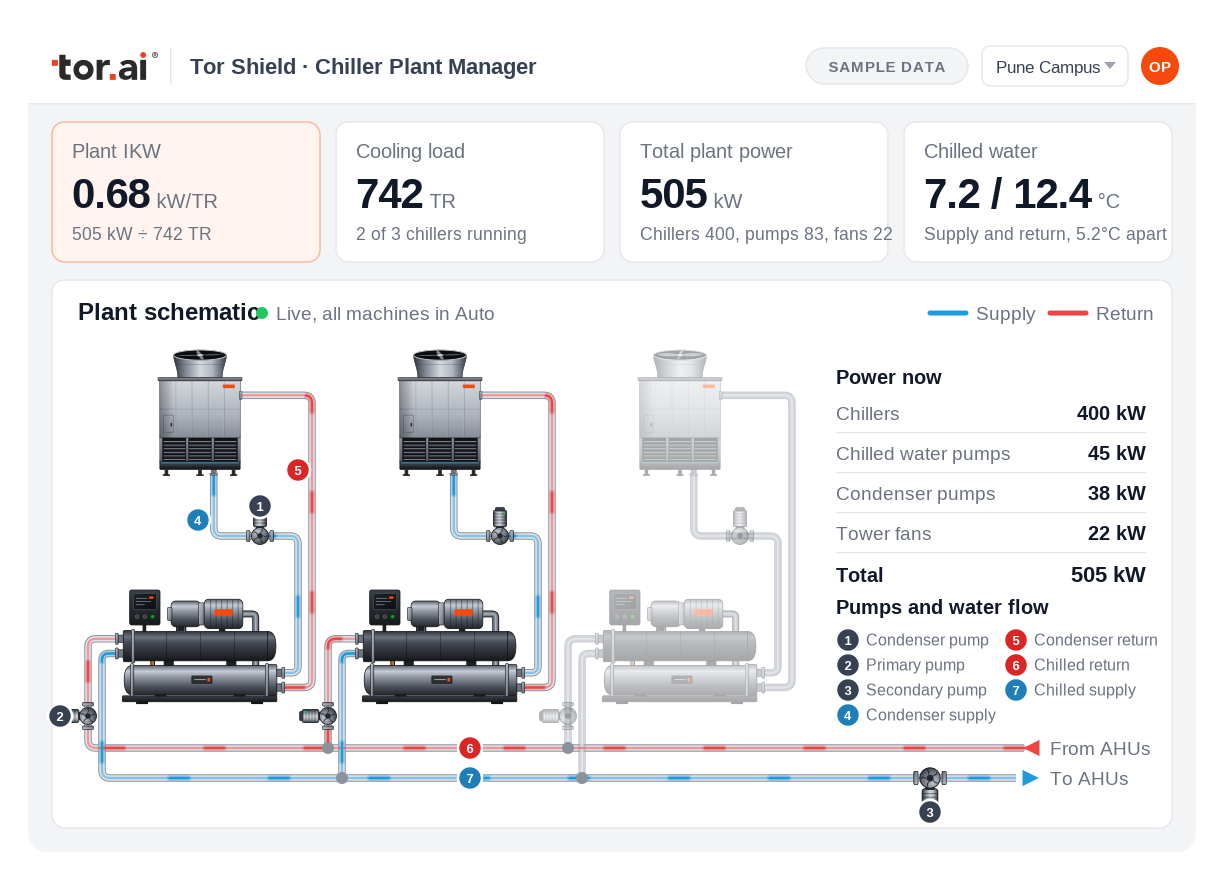
Case study
Trusted by industry leaders








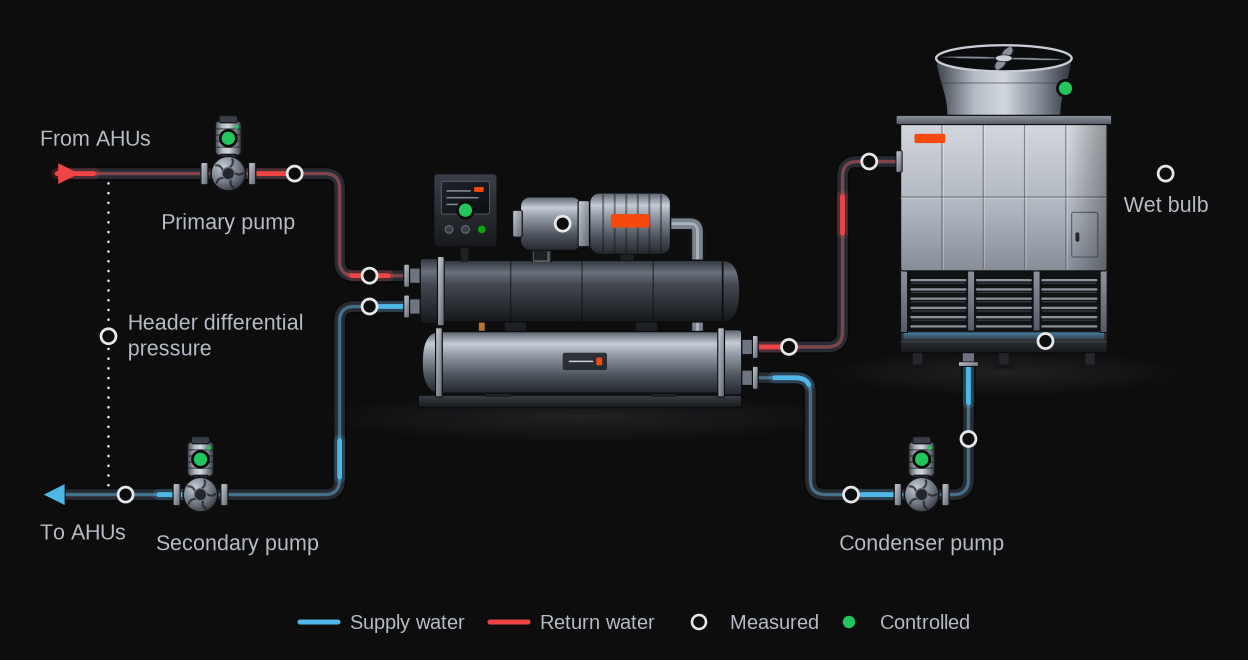
Your plant, annotated
Chillers
Secondary chilled water pumps
Condenser water pumps
Cooling towers
| Equipment | What we measure | What we control |
|---|---|---|
| Chillers | Cooling load (TR), power (kW), kW/TR, chilled and condenser water temperatures, motor current, refrigerant pressure, oil temperature, run hours | Start/stop; staging order balanced on efficiency and run hours; chilled water setpoint reset to load |
| Secondary chilled water pumps | Flow, pressure, power, VFD speed, header differential pressure | Speed on header differential pressure |
| Condenser water pumps | Flow, pressure, power, VFD speed, run hours | Speed, set together with chillers and towers (advanced option) |
| Cooling towers | Fan speed, range, approach, wet bulb, condenser water in and out, basin level | Fan speed against an approach target that tracks wet bulb, within chiller OEM limits |
Diagnostics you act on
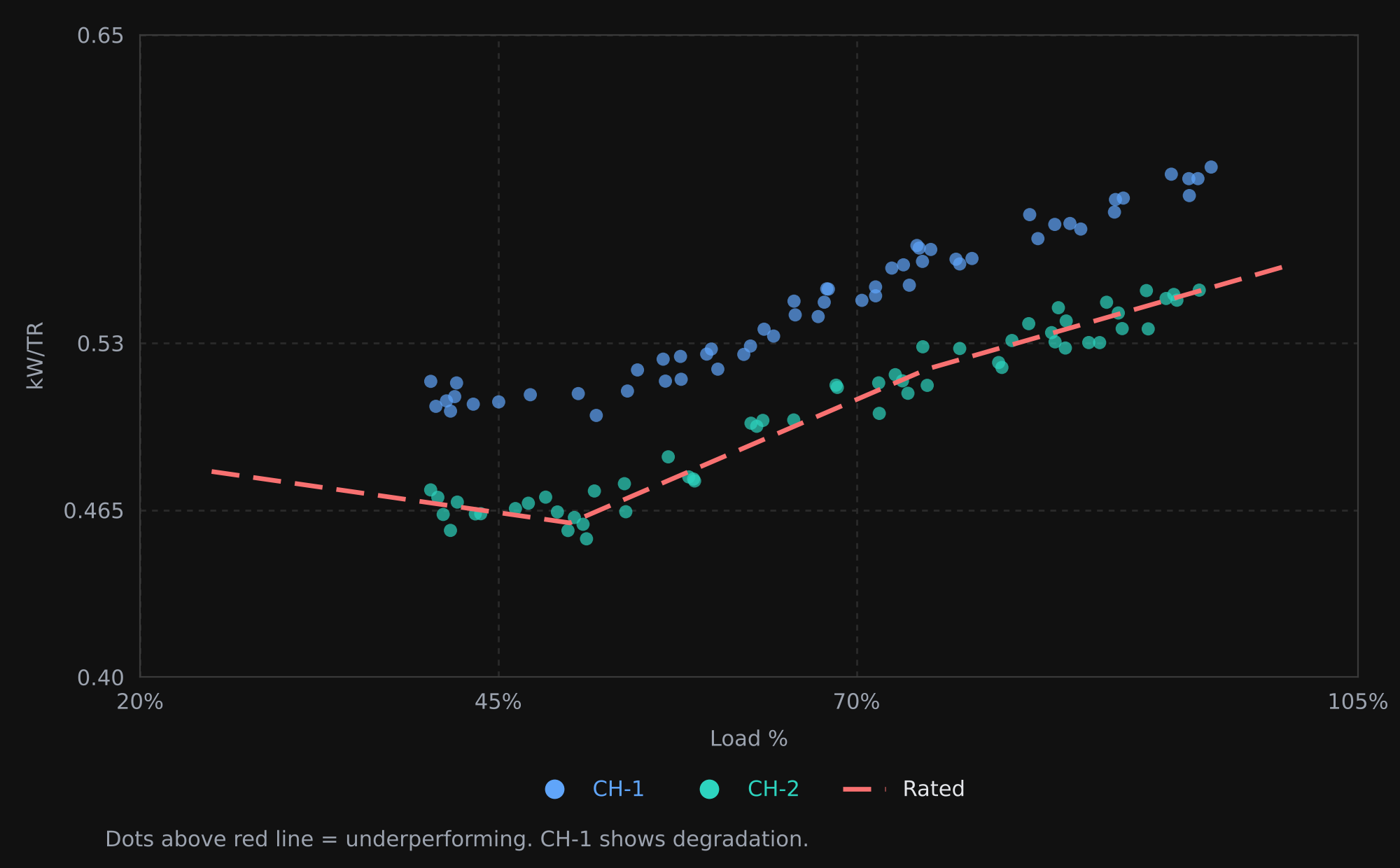
Each chiller's operating points, plotted against its rated curve. Where they sit tells you what's wrong:
Rising approach at constant fan speed and load points to fouled fill, clogged nozzles, air-side fouling or basin silt.
Every asset ranked by kWh used and cooling delivered.
Energy charges, demand charges and peak-window cost on a 24-hour heatmap.
Hours each chiller spends in each load band, showing whether staging keeps them in their efficient zone.
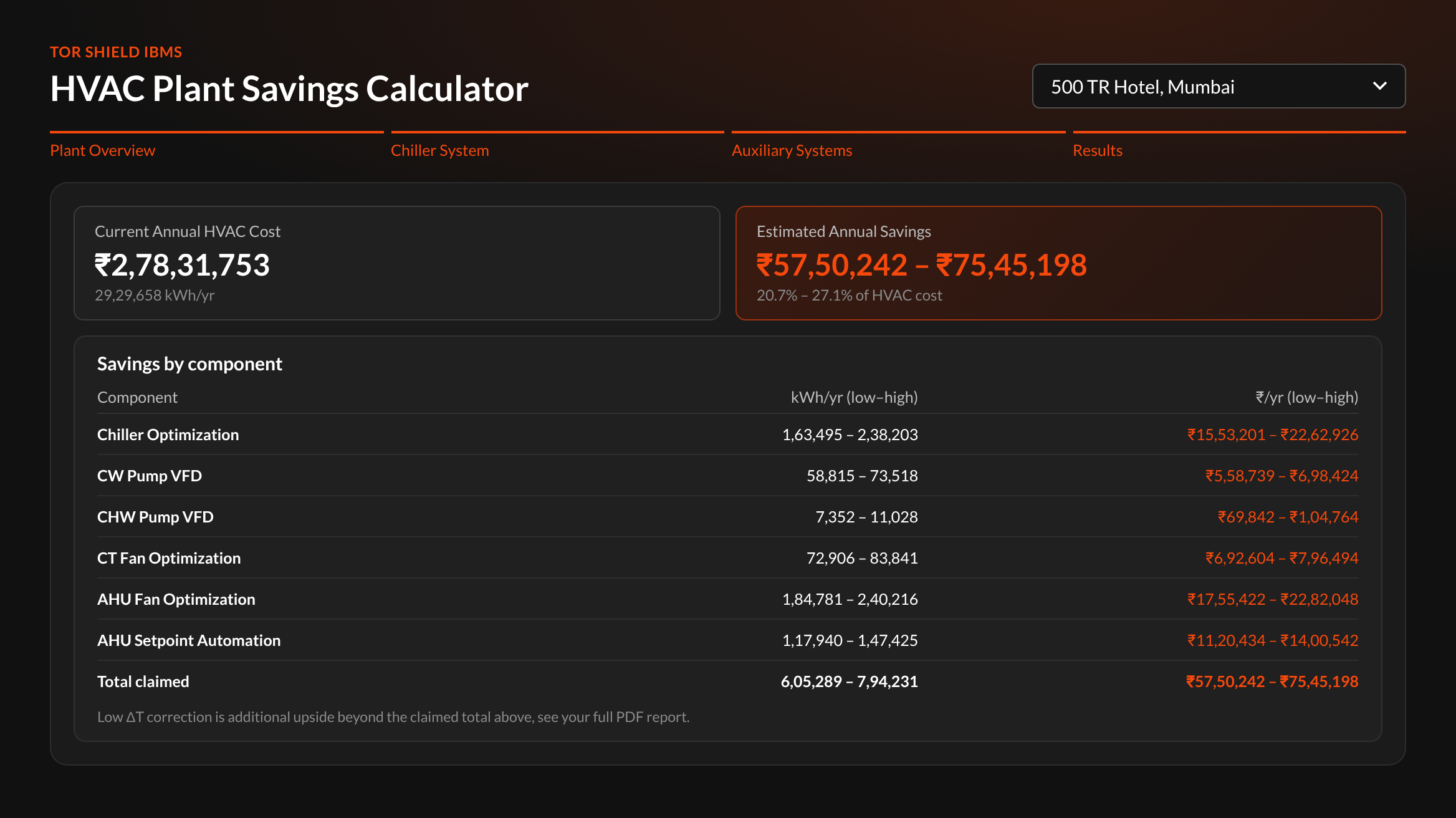
Estimate your savings
Use our savings calculator for your hotel, hospital, mall or commercial building. Enter your chillers, pumps, cooling towers and AHUs to get a savings range for each subsystem and your plant's current IKW.
Integration and hardware
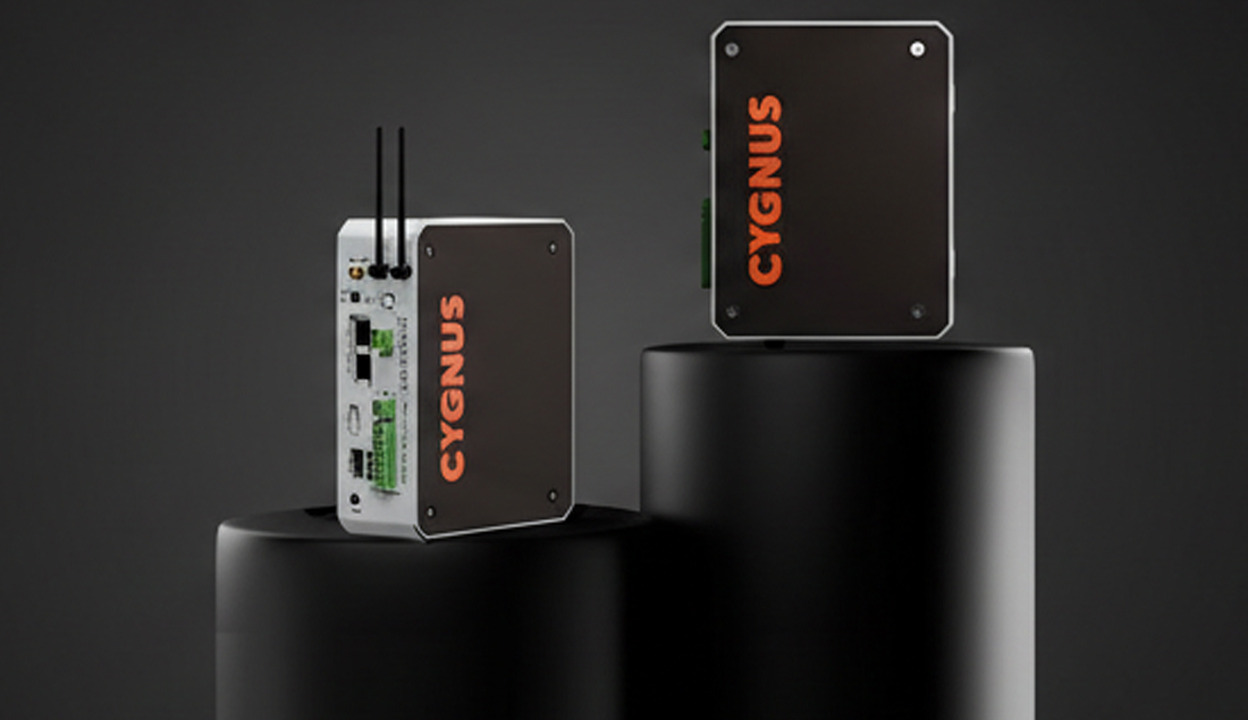
Multi-brand chiller integration over BACnet and Modbus.
You choose where the platform runs.
Every asset has an Auto/ Manual mode & an on/off control on the DDC panel & dashboard.
Several plants on one dashboard, with remote diagnostics.
Valves, pumps and compressors start and stop in the correct configurable order every time.
FAQ
Any brand that communicates over BACnet or Modbus.
No. Tor Shield runs your chillers, pumps and cooling towers within the operating limits their manufacturers set: flow, temperature, run time and restart intervals. It optimises inside those limits, never around them, so your equipment runs the way its manufacturer intended.
No. Staging and setpoint reset work without them. With VFDs, pump and tower fan speed savings come on top.
Stage-up and stage-down delays, a minimum run time and an anti-recycle timer, all configurable.
Yes. Any chiller, pump or tower can be switched to Manual from the dashboard.
The reset range is set per plant, so supply temperature stays low enough for dehumidification where the building needs it.
In the cloud, on-premises or as a hybrid.
You do. Your plant data belongs to you, and you can export it at any time.
Total HVAC optimisation
HVAC accounts for around 60% of a commercial building's energy consumption, yet its subsystems are typically controlled in isolation. Each holds its own setpoint, often at the expense of the others: a higher chilled water setpoint reduces chiller power but increases pump and AHU fan energy. Low ΔT syndrome, efficiency drift in ageing assets, and continuous variation in occupancy and ambient conditions compound the loss. Sustained savings require coordinated control across the entire HVAC system.